





Quick Take: The best chair mat material depends on your flooring, budget, and how often you use your office chair. Vinyl is generally the most affordable option, polycarbonate provides greater rigidity than flexible plastic, and bamboo offers a natural wood appearance. But for long-term durability, a quality tempered Glass Chair Mat stands apart. Vitrazza Glass Chair Mats are made from 1/4-inch (6 mm) tempered safety glass, tested to support over 1,000 lbs. Unlike flexible plastic chair mats, they won't develop caster dents, curl, or yellow with everyday use, making them an excellent investment for lasting floor protection and smooth chair movement.
Let's face it. Chair mats probably aren't the most exciting thing on your office shopping list.
You've spent time choosing your desk, finding the perfect chair, and getting your workspace just right. The surface beneath your chair? That might be an afterthought. Until your chair starts getting stuck. Or your plastic mat develops those lovely little wheel-shaped dents. Or the edges begin curling. Suddenly, the humble chair mat is getting a lot more attention than you ever intended.
The good news? You have options.
Vinyl, polycarbonate, bamboo, and glass are among the most common materials used for office chair mats. They all serve a similar purpose, but they're certainly not created equal.
So which one deserves a place in your office? Let's compare.
Vinyl Chair Mats: Affordable, but Are They Built to Last?

Vinyl chair mats, typically made from polyvinyl chloride (PVC), are among the most affordable options on the market. You'll find them in office supply stores and online retailers, often rolled up or packaged flat. Many feature small cleats on the underside to help grip carpet fibers.
For someone looking for a basic, inexpensive floor protector, a vinyl chair mat can get the job done. But there's a catch.
Vinyl is a flexible material, which means it can bend under the weight of an office chair. Over time, repeated pressure from the casters may create depressions or wheel tracks. Those little dents aren't just an eyesore. They can also make it harder to move your chair, particularly when the wheels repeatedly settle into the same areas.
Other potential drawbacks include:
- Cracking or splitting from repeated use.
- Edges that curl or no longer lie flat.
- Clouding, yellowing, or visible discoloration over time.
- Reduced rolling performance as caster depressions develop.
- The possibility of replacement when the mat becomes worn or damaged.
It's also important to choose a vinyl mat designed for your flooring. Carpet mats with pointed cleats generally aren't appropriate for hardwood or other hard surfaces.
Best for: Shoppers prioritizing a low upfront price or needing a basic, shorter-term floor protection solution.
Vinyl may be budget-friendly at checkout. But if you're replacing it every time it cracks, curls, or develops dents, the bargain can start looking a little less impressive.
Polycarbonate Chair Mats: An Upgrade From Traditional Vinyl?

If you've researched plastic chair mats, you've probably encountered polycarbonate. Polycarbonate is a more rigid plastic commonly marketed as an upgrade from traditional flexible PVC chair mats. And in some ways, it is.
Polycarbonate mats can offer a firmer rolling surface, greater resistance to flexing, and better resistance to caster depressions than lower-quality flexible vinyl mats. They are also available in transparent designs for shoppers who want their flooring to remain visible.
Sounds pretty good, right?
Well, there's still a difference between a more rigid plastic mat and a solid glass surface.
Polycarbonate performance depends on the thickness, construction, chair weight, and flooring underneath. While a quality polycarbonate mat may last for years, it can still develop surface scratches or other signs of wear. Depending on the product and conditions, deformation may also occur over time.
Polycarbonate vs. Glass Chair Mats: Which Is More Durable?
Both polycarbonate and glass provide a firmer rolling surface than flexible vinyl, but their performance can differ over time.
Polycarbonate is a rigid plastic that can resist caster dents better than traditional PVC. However, its durability depends on thickness, construction, chair weight, and flooring conditions. Polycarbonate mats may still show surface wear or deformation with extended use.
A Vitrazza Glass Chair Mat is made from solid 1/4-inch (6 mm) tempered safety glass that maintains a consistently rigid rolling surface without developing caster dents or wheel tracks under normal office chair use. Glass also won't curl or yellow like many plastic alternatives.
For shoppers who prioritize a lower upfront cost, polycarbonate can be a reasonable option. But for those seeking long-term rigidity, resistance to caster depressions, and a lasting clear appearance, a quality tempered Glass Chair Mat offers compelling advantages.
Bamboo Chair Mats: A Natural Look With a Few Considerations

Bamboo chair mats offer something that vinyl and polycarbonate don't: the appearance of natural wood. For a workspace with warm tones, organic textures, or traditional furniture, bamboo can be an attractive choice.
Bamboo chair mats are typically constructed from slats or panels, with designs that may be rolled or folded for storage and transport. They often provide a firmer rolling surface than flexible vinyl mats, although performance depends on the product's construction.
But before choosing bamboo, there are a few things to consider.
Flooring Compatibility
Some bamboo chair mats work well on hard floors and low-pile carpet, while others have restrictions based on carpet thickness or the type of backing used. Product-specific recommendations matter, particularly on softer carpet or uneven surfaces.
Surface and Construction
Unlike a single, solid sheet of glass, many bamboo mats are made with individual sections or slats. Their construction, joints, finish, and backing can all influence long-term performance. Some designs may show wear at connection points or along the finished surface.
Appearance
This one comes down to personal preference. Bamboo offers a natural wood aesthetic, but it also covers your existing flooring. If you've invested in beautiful hardwood, decorative tile, or carpeting you love, you might prefer a chair mat that lets those details show through.
And here's something else to consider: bamboo is already a prominent design element. If your office has a particular color palette or flooring finish, you'll want to make sure the mat complements it rather than competing with it.
Best for: Shoppers who prefer the look of natural materials and have a flooring type compatible with their chosen bamboo mat.
Bamboo can be a beautiful choice. But if your goal is a smooth, nearly invisible floor protector, there's another material worth considering.
Glass Chair Mats: The Long-Term Investment

Now we're talking.
Glass Chair Mats take a different approach to floor protection by using a solid, rigid surface rather than a flexible material. That difference matters every time you move your chair.
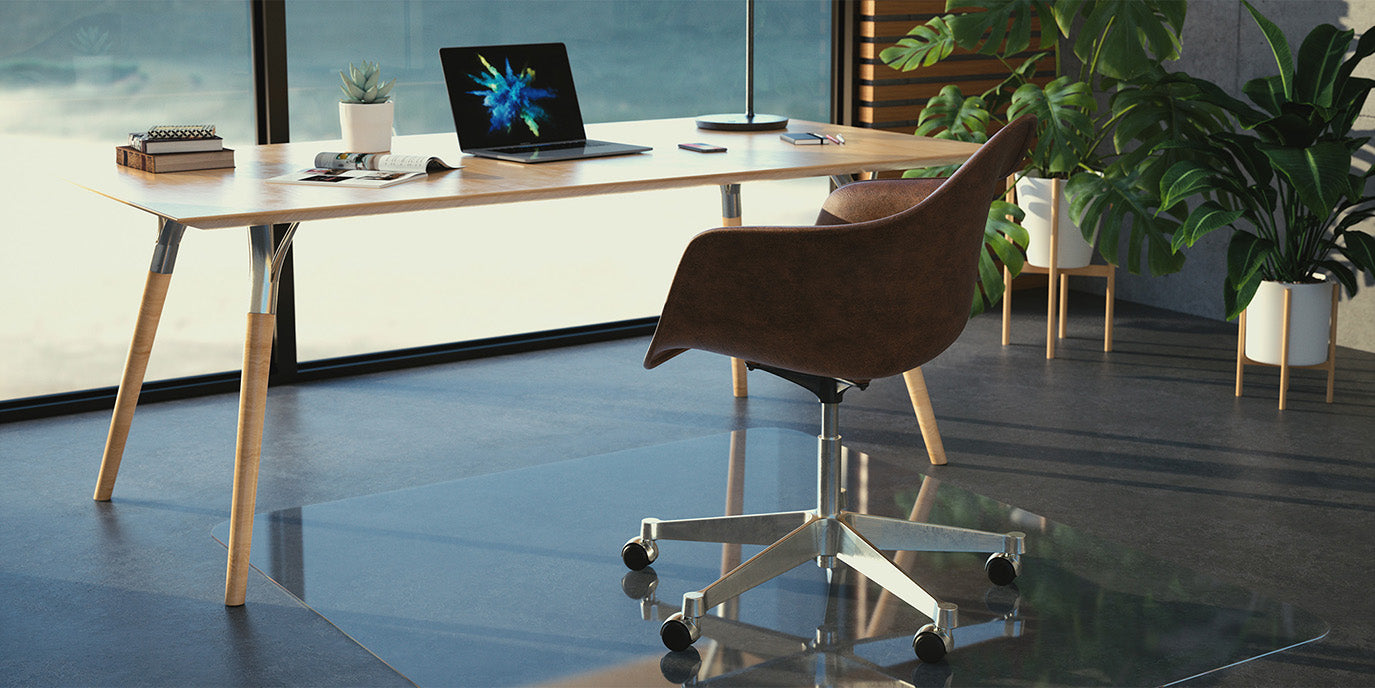
On carpet, a Glass Chair Mat creates a firm rolling surface above the fibers and padding. On hard flooring, it provides a protective barrier between your office chair wheels and the floor beneath.
And because glass doesn't flex or develop caster depressions under normal use, the rolling surface stays consistent over time. No wheel-shaped craters. No curling corners. No yellowing plastic. Just a smooth, solid surface that does what a chair mat is supposed to do.
Durability That Goes Beyond Everyday Wear
A quality Glass Chair Mat is designed for long-term use. Unlike flexible vinyl, glass won't develop caster dents or wheel tracks. It also maintains its shape without the curling and warping that can affect some plastic mats.
Vitrazza Glass Chair Mats are manufactured from solid 1/4-inch (6 mm) tempered safety glass, tested to support over 1,000 lbs. That substantial construction provides a reliable rolling surface for everyday office use.
Glass is not completely immune to scratches or damage, so proper handling and maintenance still matter. However, its rigid construction offers durability advantages that make it particularly appealing for workspaces used every day.
Smooth Chair Movement
Your office chair has wheels for a reason. You should be able to reposition at your desk, turn between monitors, and reach for nearby supplies without feeling like you're trying to move furniture across a beach.
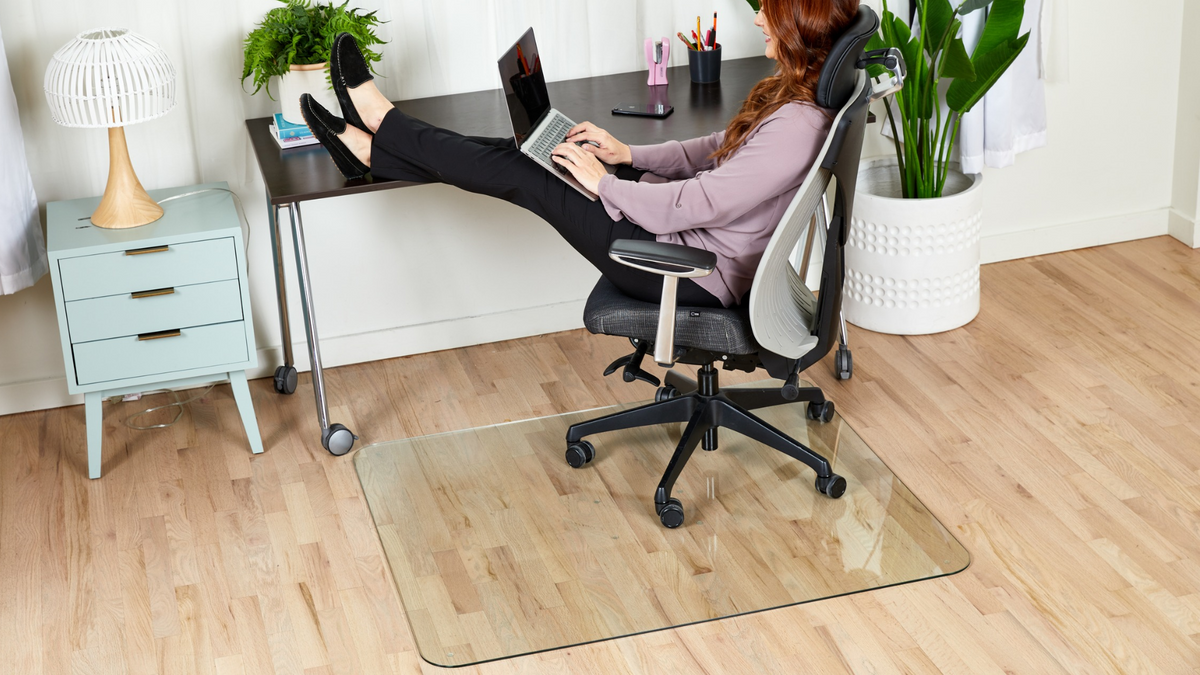
A rigid Glass Chair Mat allows chair wheels to roll easily without sinking into carpet or becoming caught in caster depressions. This isn't just about convenience, either.
A pilot ergonomic study found that using a Vitrazza Glass Chair Mat reduced observed awkward postures by up to 93% compared with rolling directly on a rug, while also increasing healthy mini-movement throughout the workday. The findings suggest that the surface beneath your office chair can play an important role in how naturally you reposition throughout the day.
Read more about office chair mobility and ergonomics.
Protection Without Hiding Your Flooring
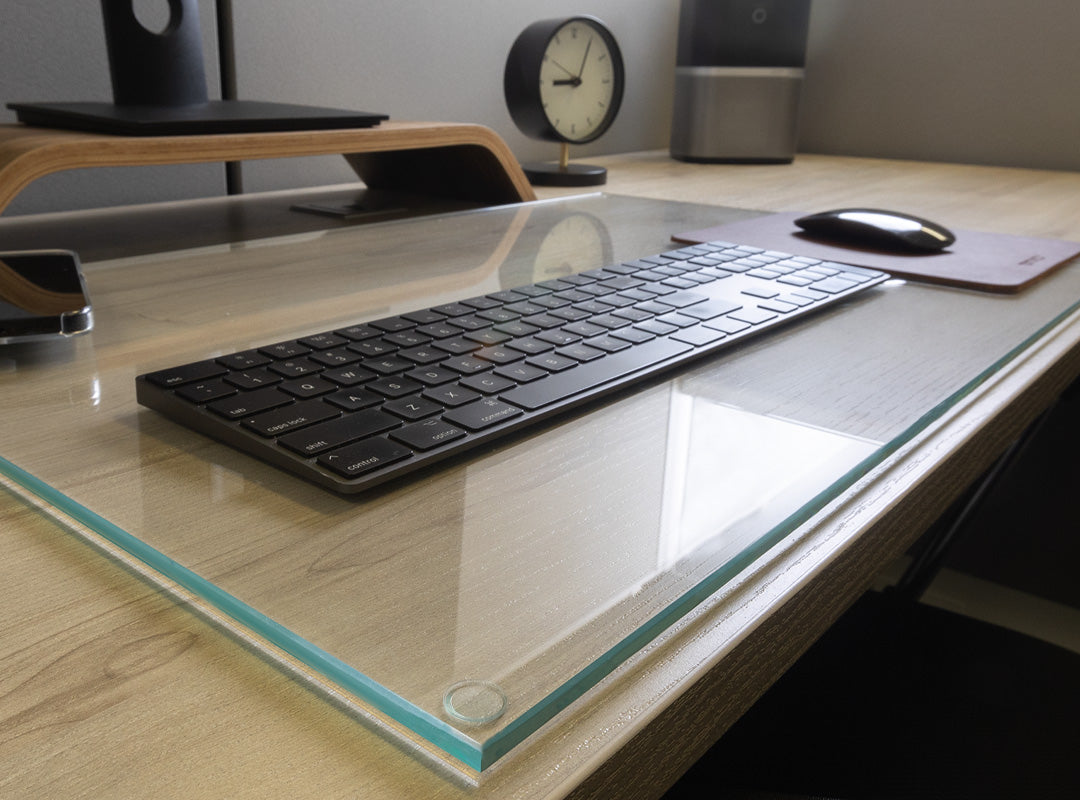
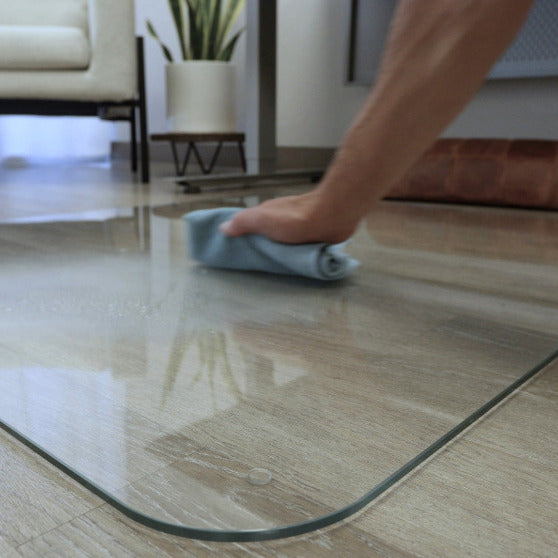
One of the most distinctive advantages of glass is its transparency.
- Beautiful hardwood floors? Let them show.
- A carefully selected carpet? Keep the color and texture visible.
- Decorative tile? There's no reason to cover up the details.
A transparent Glass Chair Mat provides floor protection without becoming a competing design element. It's a subtle detail that makes a significant difference in a thoughtfully designed workspace.
Long-Term Value
Glass Chair Mats generally cost more upfront than traditional vinyl or plastic alternatives. But purchase price is only one part of the equation. A chair mat that needs to be replaced due to cracks, curling, or caster dents creates an additional expense each time.
A quality Glass Chair Mat is designed to provide lasting performance without routine replacement for those common plastic-mat problems. For someone who uses an office chair regularly, the investment can make sense over years of everyday use.
We explore this further in Are Glass Chair Mats Worth It?, including the potential cost of repeatedly replacing plastic chair mats.
Best for: Shoppers prioritizing long-term durability, easy chair movement, reliable floor protection, and a refined workspace.
Glass vs. Vinyl vs. Polycarbonate vs. Bamboo: How Do They Compare?
Each chair mat material offers advantages, but the differences become clearer when you compare the features that matter most.
| Feature | Vinyl (PVC) | Polycarbonate | Bamboo | Glass |
| Upfront cost | Generally low | Low to moderate | Moderate to high | Higher investment |
| Rolling surface | Flexible | More rigid than vinyl | Generally firm | Solid and rigid |
| Caster dents | Likely to develop | May develop, but more resistant than vinyl | Depends on construction | Resists caster dents |
| Long-term wear | Likely to crack, curl, or discolor | May crack, scratch or deform | Finish or joints may wear | Maintains its shape and clarity |
| Carpet compatibility | Requires carpet-specific design | Depends on product | Often limited by pile height | Suitable with proper installation |
| Hard floor compatibility |
Depends on product, may scratch flooring with shifting |
Depends on product, may scratch flooring with shifting | Depends on product, may scratch flooring with shifting | Suitable with appropriate bumpers |
| Appearance | Clear, frosted or tinted plastic | Usually transparent | Natural wood look | Transparent glass |
| Replacement considerations | May require replacement due to wear | May require replacement due to wear | May require replacement due to wear | No routine replacement expected with proper use |
How Long Do Different Chair Mat Materials Last?
The lifespan of a chair mat depends on its material, construction, flooring, and frequency of use.
Flexible vinyl chair mats may need replacement when caster dents, cracking, curling, or warping begin to affect chair movement. Polycarbonate and bamboo can provide longer service depending on their quality and construction, but they may also show wear over time.
Tempered Glass Chair Mats offer a different kind of durability. Because glass maintains its rigid shape and doesn't develop caster dents, curl, or yellow like flexible plastic, a quality Glass Chair Mat is designed to provide years of consistent performance without routine replacement.
When should you replace a chair mat? Consider replacement when the surface is no longer flat or stable, visible damage affects performance, or your chair wheels regularly become caught in depressions.
Vitrazza Glass Chair Mats are designed for long-term use and backed by a Transferable Lifetime Warranty, helping make them a lasting alternative to repeatedly replacing worn plastic mats.
The takeaway?
If upfront price is your only consideration, vinyl will often win.
If you want a more rigid plastic, polycarbonate may be worth the upgrade.
If you love the appearance of natural wood, bamboo offers a distinctive look.
But if you're looking for a long-lasting combination of durability, smooth chair movement, floor protection, and design, glass is hard to beat.
Which Chair Mat Material Is Best for Carpet, Hardwood, and Other Floors?
The best material also depends on what's underneath it.
A chair mat should protect your flooring while providing a stable surface for everyday movement. Not every product is suitable for every type of floor.
Carpet
Carpet creates resistance because chair wheels can sink into the fibers and padding. Rigid materials such as glass can provide a more consistent rolling surface than flexible vinyl, particularly on thicker carpeting.
Vitrazza Glass Chair Mats include a Stabil-a-dot™ Bumper System with options designed for standard and high-pile carpet.
For a deeper comparison, read What Is the Best Chair Mat for Carpet?
Hardwood
On hardwood, the priorities are reducing direct caster wear, avoiding abrasive debris, and protecting the floor's finish.
Glass, appropriate polycarbonate products, and certain bamboo mats may all be suitable, depending on their backing and the flooring manufacturer's recommendations.
A transparent Glass Chair Mat has the added benefit of allowing the natural beauty of the wood to remain visible.
Tile and Laminate
On tile, grout lines and textured finishes can interrupt chair movement. A rigid chair mat can create a more consistent rolling surface.
On laminate, a compatible chair mat can help protect the finish from repeated caster contact.
For both surfaces, it's important to choose a product and installation method appropriate for the flooring.
Want the full breakdown? Explore Do You Need a Chair Mat? A Guide for Every Floor Type.
What Makes a Vitrazza Glass Chair Mat Different?

Not all Glass Chair Mats are created equal. While material choice is important, the details of how a Glass Chair Mat is constructed can influence its strength, appearance, and everyday performance.
Vitrazza Glass Chair Mats bring together several carefully considered features:
- 1/4-inch (6 mm) tempered safety glass: Tested to support over 1,000 lbs, with a substantial, rigid construction that resists flexing during everyday use.
- Invisible Shield® Pro 15 Nano Tech Coating: A specialized treatment that helps resist fine scratches, repel water and oils, and simplify cleaning.
- Furniture-quality Mini-Bevel edges: A refined edge design that preserves more glass thickness near the perimeter than an extra-wide tapered bevel.
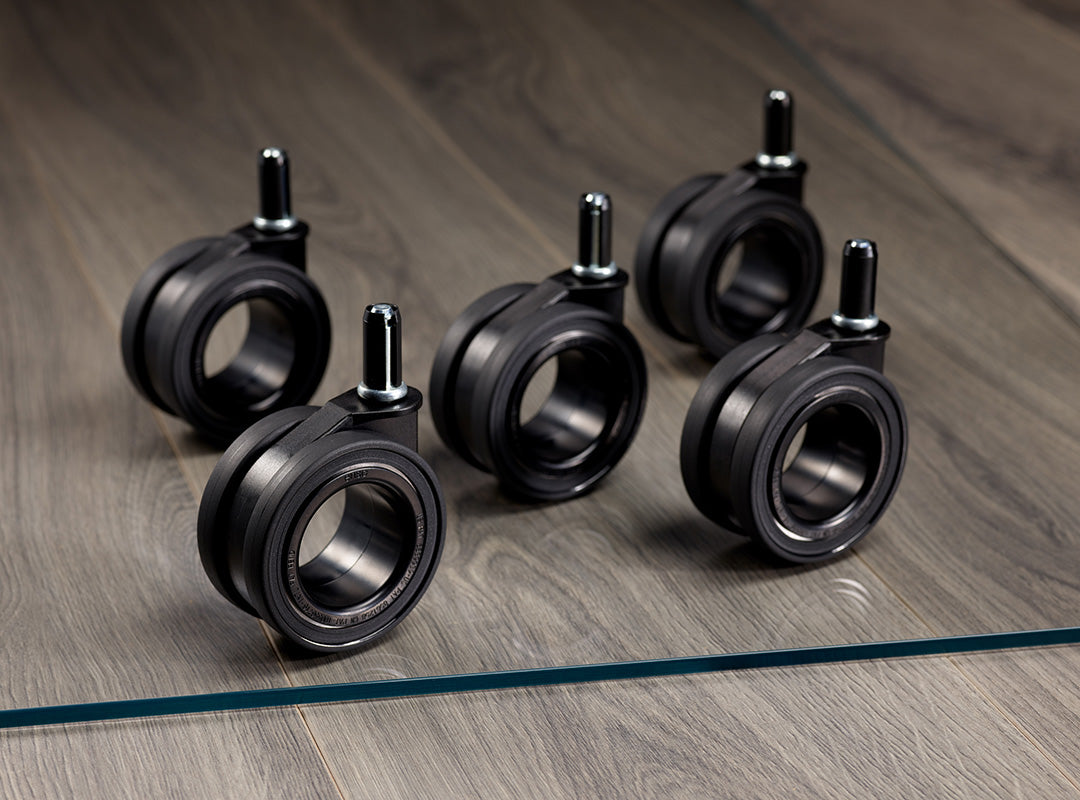
- Patented Stabil-a-dot™ Bumper System: Clear rubber bumpers designed to help keep the Glass Chair Mat positioned on carpet and hard flooring.
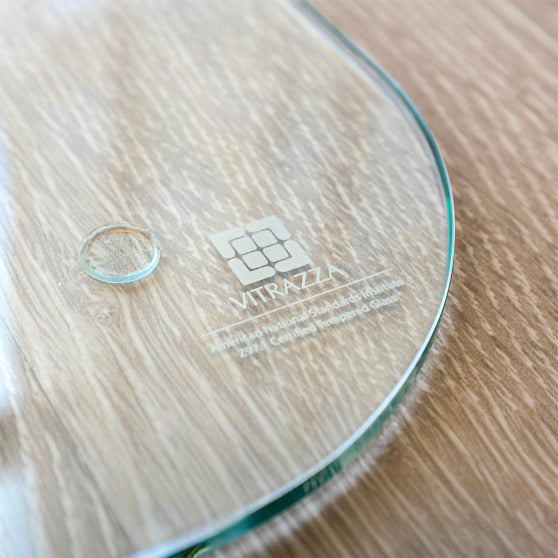
- SGCC certification and ANSI Z97.1 compliance: Independent safety-glazing certification and standards.
- Transferable Lifetime Warranty: Long-term coverage under the published warranty terms.
Glass thickness is especially important when comparing manufacturers. Some Glass Chair Mats use thinner 4 mm glass, while Vitrazza uses 6 mm tempered safety glass across its Glass Chair Mat collections. Learn why in 4 mm vs. 6 mm Glass Chair Mats: Why Thickness Matters.
Vitrazza also offers 22 in-stock sizes across the Prima Collection™ and Moda Collection™, plus fully custom designs through the Vista Collection™. So whether you're outfitting a compact home office or creating a workspace with unique dimensions, there are options designed around your space.
The Results Are Clear
Vinyl, polycarbonate, bamboo, and glass all have their place.
For some shoppers, the lowest upfront price matters most. For others, it's the appearance of natural wood or the convenience of a lightweight material.
But if you're looking for a chair mat that delivers lasting durability, smooth chair movement, and a refined appearance, a quality tempered Glass Chair Mat stands apart.
Vitrazza takes those benefits further with 1/4-inch (6 mm) tempered safety glass, thoughtful engineering, and a Transferable Lifetime Warranty. It's a combination designed for everyday performance without the caster dents, curling, and repeated replacements associated with many flexible plastic alternatives.
Because the best chair mat isn't necessarily the cheapest one on the shelf. It's the one you don't have to keep replacing. And when it comes to durability, performance, and lasting beauty, the choice is clear.
Shop Vitrazza Glass Chair Mats
